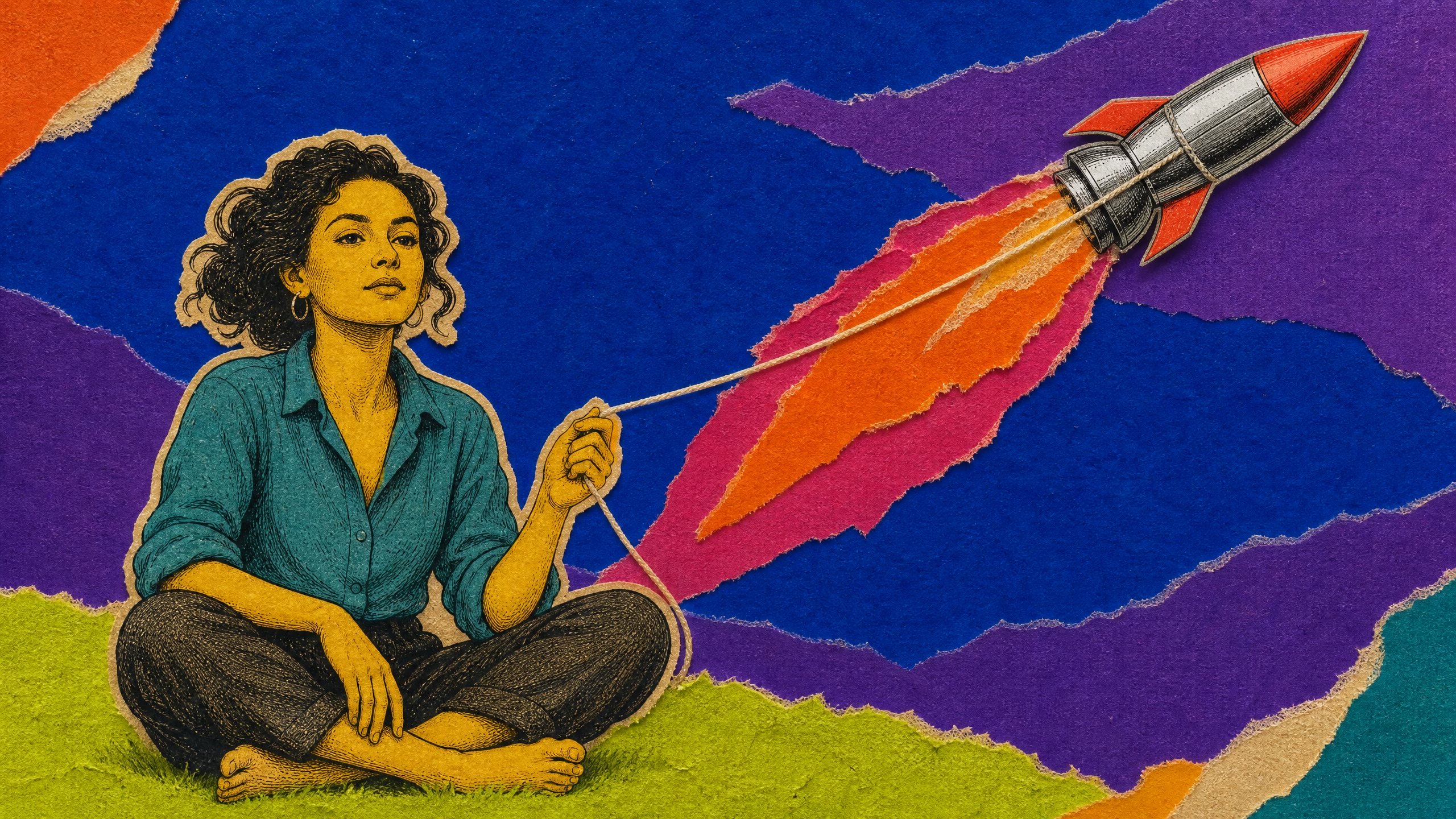
The World Is Speeding Up. Here’s How to Stay Steady.
You can’t slow the current. But you can choose where you stop.
Have you noticed how fast everything feels right now?
Not just busy. Fast. Like the ground is moving under your feet.
AI can research, write, analyze, build a website and run a marketing campaign. It does it in seconds. And by the time we’ve understood the first answer, AI already feels twenty steps ahead.
So we hurry to keep up. Everything feels urgent, all the time. It can feel like you wake up already at a ten and stay there all day.
What the Rush Does to Us
When the world moves this fast, we start to feel uneasy. This feeling doesn’t leave.
Have you ever ended a full day and still felt you didn’t get enough done? Have you lain awake wondering if your job will still be there next year? Have you ever wanted to opt out of all of it?
If that’s you, you’re not alone. Most of us are carrying it. Overwhelmed, tired, with a low hum of worry running in the background.
That isn’t a flaw in you. It’s a body being asked to keep a pace it was never built for.
Machine Speed vs Human Speed
It’s not that we reject AI. Most of us don’t.
It’s that we’re built to need time. Time to think things through. Time to notice how we feel before we decide what to do.
Humans ponder. We talk it over with the people we love. We pause, we reflect, and then we adjust.
A machine needs none of that. It runs at machine speed, and we run at human speed.
Human speed isn’t slow. It’s how we’re made.
And right now, everything is changing at once: how we work, how we connect, how we run our homes and our businesses.
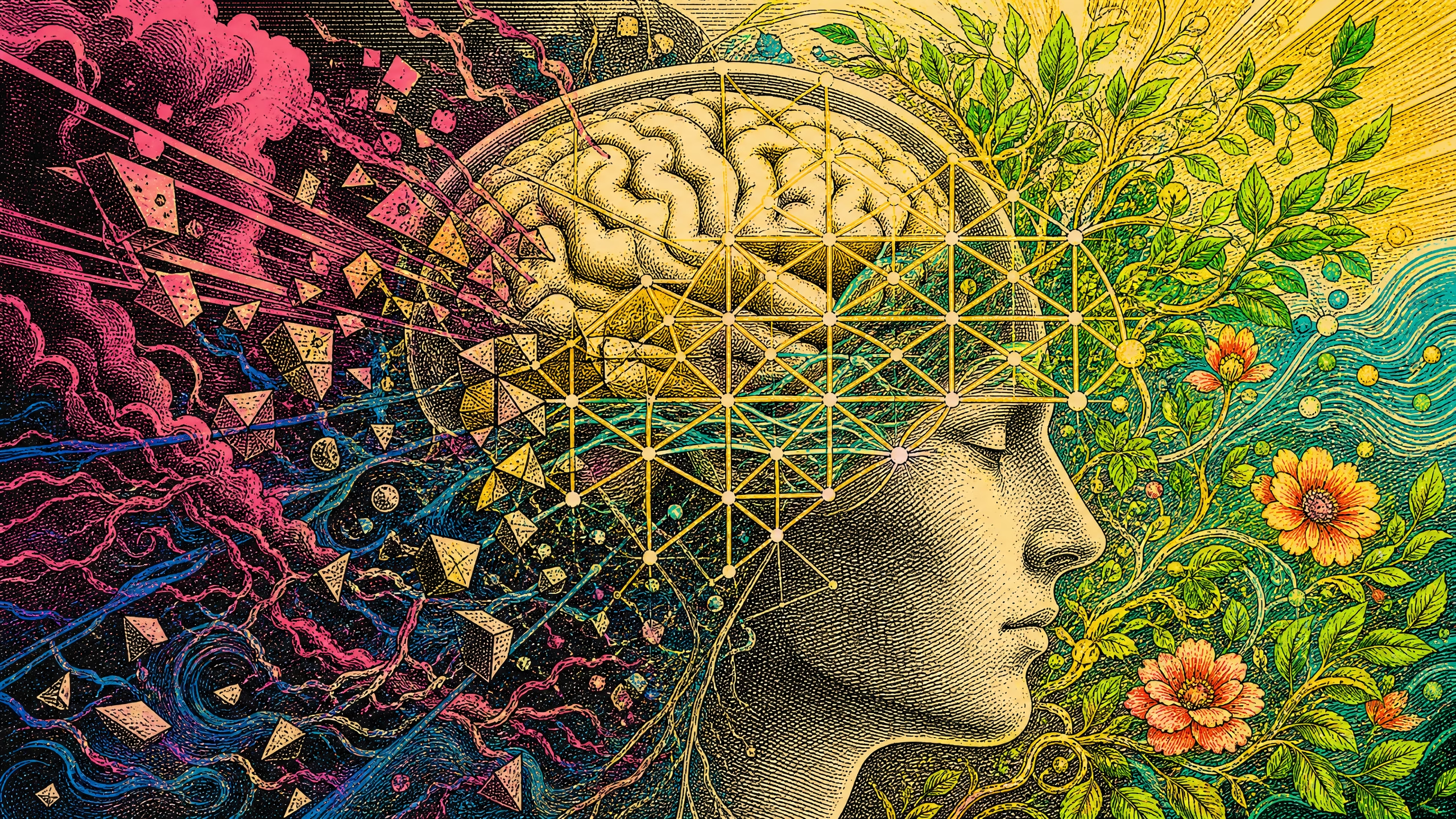
Our nervous system never gets the time it needs to settle. So we feel unsteady, out of sorts, without an anchor.
Being Carried vs Dropping Anchor
Picture a small boat on a fast river.
If it does nothing, the current takes it wherever the water is going. It spins and bumps into the banks. It never gets to choose.
Now picture the same boat dropping anchor. The water is still rushing past, and nothing about the river has changed. But the boat is steady.
And from that steady place, it can look around. It can see where it wants to go.
That’s what a daily stop does for you.
You can’t slow the water, and you don’t have to out-swim it. You only have to drop anchor.
Then you lift it again. An anchor isn’t hiding from the river. It’s how you choose your heading.
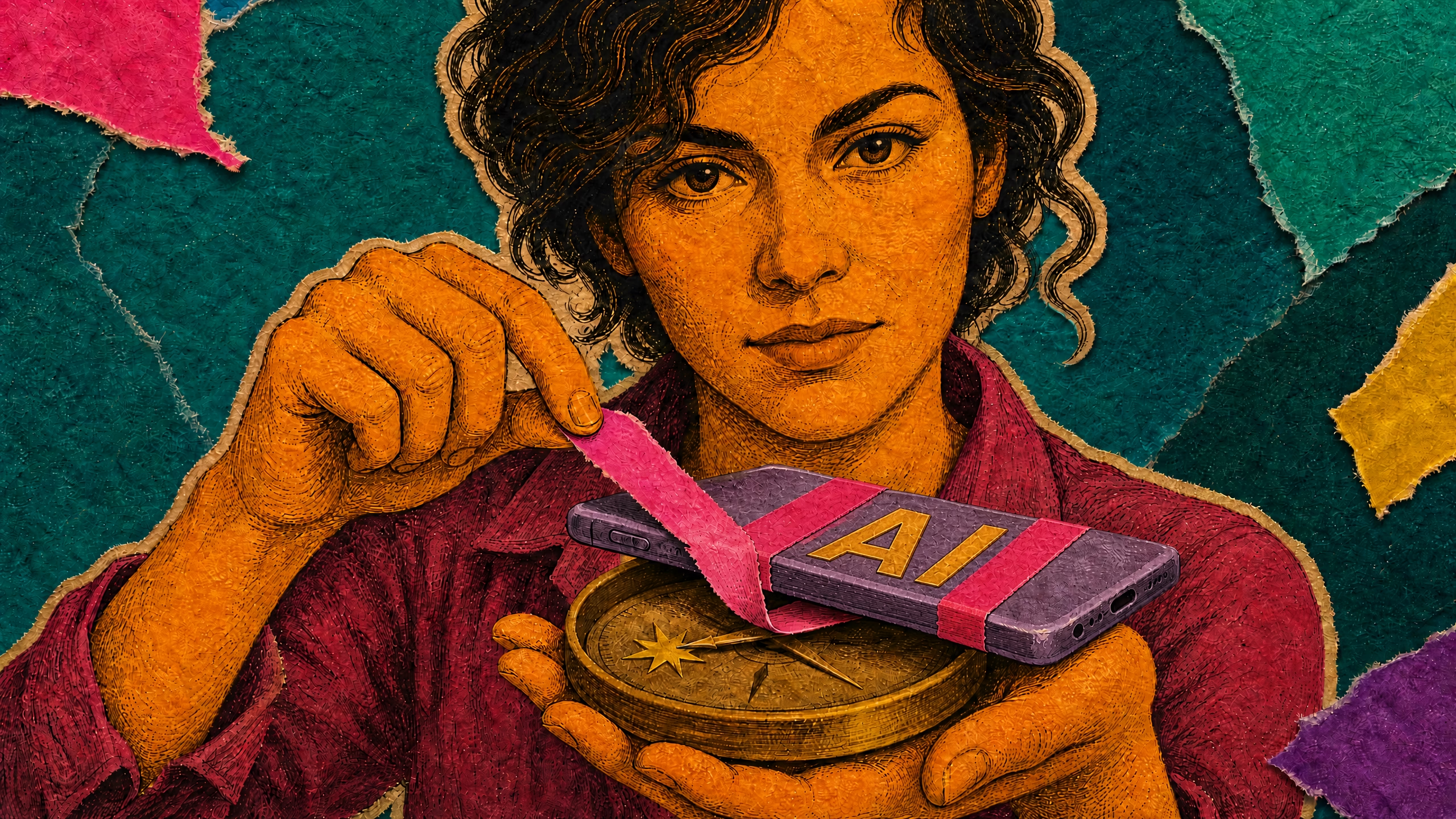
And AI? It becomes the engine you steer, not the current that carries you.
The Part of You That Pushes Back
I’m not going to pretend this is easy.
The moment you stop, a part of you will push back. You don’t have time for this, it says. Keep going.
That voice isn’t being dramatic. When you stop scanning for what’s wrong, it feels like you’re letting danger in.
Or put another way, your body reads the pause as a threat. And when we sense a threat, we fall into one of three reactions every human has: fight, flight or freeze. They’re built in to keep us safe.
So we want to take flight, but we don’t know where to. We want to fight, but we don’t know who with. Or we freeze, wide-eyed, and do nothing at all.
It feels real. To your body, it is real. And that’s not weakness, it’s a body trying its hardest to protect you.
What Calm Gives Back
So here’s what happens when you stop anyway.
You put the phone down. You stop scrolling. And slowly, you come back to yourself.
From that calm place, something shifts. You notice your thoughts instead of being dragged along by them. You get to choose again.
In our experience, that matters for everything you’re calling in.
We believe your frequency follows the state you’re in. And it’s very hard to create from a body braced for danger.
Calm isn’t time away from your life. It’s where you create it from.
Your Seven-Day Practice
So here’s something you can do for the next seven days. Three small anchors a day, plus two small habits. None of them takes long.
- Morning anchor. Before you reach for your phone, take three slow breaths and say a quiet line to yourself, like I am here. Then drink a glass of water, and step into the daylight if you can.
- Midday anchor. When you notice your shoulders creeping up, stop. Look out a window at something far away and take a few unhurried breaths.
- Night anchor. Dim the lights and put the screens away. Choose something calm instead: a warm shower, a gentle stretch, quiet music or a book.
- Pick your message hours. Choose an hour or two that suits your day for answering messages. Outside of that, let them wait.
- Get your feet on the grass. Once a day, even for five minutes. Walk, sit, or just stand outside and breathe.
On day seven, check in. Do you feel steadier? Did the day throw you off course a little less often?
And if the anxiety is heavy, or it just won’t lift, please reach for real support too. This practice can sit alongside that help. It’s never a replacement for it.
This isn’t a one-and-done.
Some days the current will still pull at you, and that’s allowed. You simply drop anchor again.
So… when will you drop your first anchor today?

Leave a Reply